Jobs and selling
Facebook Marketplace Scam (2026): Fake Zelle Payment & Buyer Traps
Facebook Marketplace scam selling or buying? Spot fake Zelle/Venmo screenshots, overpayment refunds, shipping traps, and escrow cons — confirm funds in your own app first.
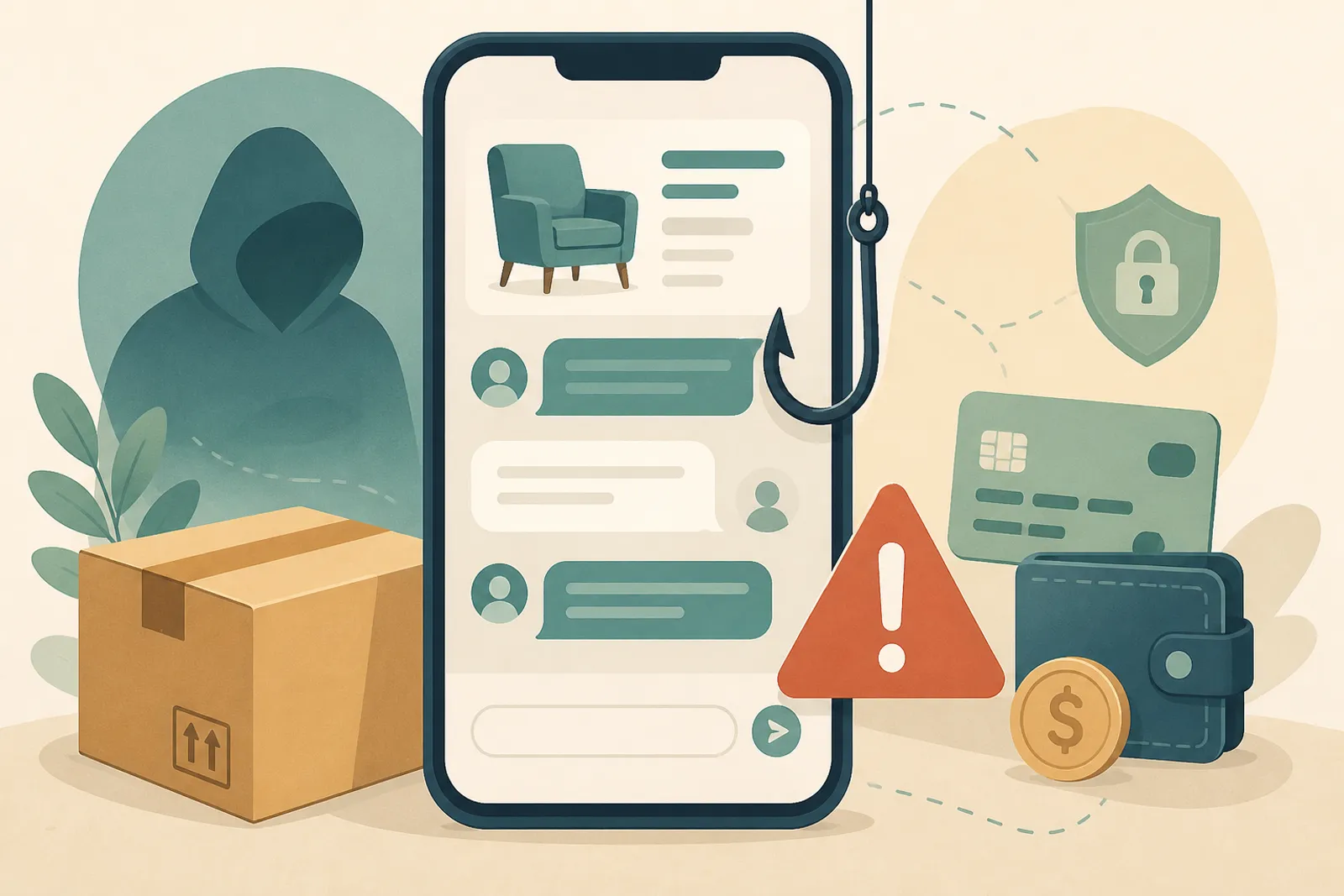
Short answer: A Facebook Marketplace scam (also searched as Marketplace payment scam / fake Zelle payment) usually fakes a payment (screenshot, email, “Zelle business upgrade,” overpayment refund) or pushes a too-good remote listing that never ships. Only believe money you can see as available in an app or bank you open yourself. Local cash / protected checkout beats Friends-and-Family urgency. Already sent money or goods? Jump to If you already sent money or goods.
Someone agrees to your price too fast. The chat is warm. Then a “payment sent” picture arrives — or a shipping story, mover fee, or upgrade request. That spike of relief is the product. Marketplace fraud does not always need a fake sofa photo. It needs you to trust a picture of money instead of money.
If a “buyer” later texts a courier fee that looks like USPS or FedEx smishing, treat that as the same scam family — verify shipping only through services you open yourself.
Quick answers people search
What is a Facebook Marketplace scam?
Fraud on Marketplace chats or listings that steals money, goods, or account access — including fake payments aimed at sellers and fake listings aimed at buyers.
Is Facebook Marketplace safe?
It can be for careful local deals. It is not “safe by default.” Treat every stranger payment like a bank transfer to someone you have never met in person.
How do I spot a Facebook Marketplace payment scam?
If proof of payment is only a screenshot/email, or they ask you to refund an overpayment / pay a fee to “release” funds, stop. Open your own Zelle, Venmo, PayPal, or bank app. No available balance = no deal.
What about a Facebook Marketplace shipping scam?
Remote “I’ll pay extra — ship tonight” pressure plus fake payment proof is the classic seller trap. Buyers get the mirror: deposit now, item never ships, or a fake courier fee text.
Choose a door (read your lane first)
| Door | You are… | First rule |
|---|---|---|
| A — Selling | Listing furniture, phones, consoles, cars, tickets | No item leaves until your account shows cleared funds |
| B — Buying | Chasing a steals-of-the-day deal | No remote payment to a stranger who refuses a public meet |
Scammers flip roles when it helps. Skim both doors if you do both.
Door A — Facebook Marketplace scams that target sellers
Fake “payment sent” screenshots and emails
They send an image or a lookalike “receipt.” Real money does not live in your camera roll. Open Zelle / Venmo / PayPal / your bank yourself. If it is not there and available, you were not paid. Meta’s own Marketplace guidance treats buyer-side payment tricks that leave sellers unpaid as scams — report and stop the chat.
Overpayment + “refund the difference”
They “accidentally” send too much (or pretend to). They ask you to refund extras for movers, shipping, or taxes via Zelle. The original payment was fake or will bounce. Your refund is real cash leaving. Never refund an overpayment on Marketplace until your bank confirms the deposit is final — and canceling is usually smarter.
Zelle / Venmo “business upgrade” story
A fake email says the buyer’s payment is held until you upgrade to a “business” profile — and somehow you must send money or share a code to unlock it. That is not how Marketplace checkout works. Hang up the plot.
Out-of-town shipping urgency (Facebook Marketplace shipping scam pattern)
They cannot meet. They will “pay extra.” They push an off-platform label or their own courier. Goal: you ship before funds exist.
Advance fee to “release” a buyer payment
Any “pay $80 to release $900” is inverted reality. Receiving money should not require wiring fees to strangers.
Door B — Facebook Marketplace scams that target buyers
Too-cheap listing + “I can ship today”
They push you off Marketplace to WhatsApp/text, demand Friends-and-Family PayPal, gift cards, or crypto. Item never appears — or a “courier” texts a fake customs fee (cousin of USPS / FedEx smishing).
Deposit to “hold” the item
Cash-app hold fees for a local sofa are rarely necessary. Meet publicly or walk away.
Fake escrow / “Amazon or eBay will hold the money”
Especially on cars and big-ticket goods: seller is “out of town,” wants a wire or prepaid card to a third party that will “refund if you don’t like it.” BBB has warned about this Marketplace costume for years. Real dealerships and real owners do not need that theater.
Fake seller “Meta support” overlays
If a chat suddenly becomes “Facebook Security,” treat it like account phishing. Open Facebook/Meta Help yourself — never through the chat link.
Red flags checklist (save this)
| Signal | Why it matters |
|---|---|
| Agrees to price with zero questions | Scripted buyer / seller |
| Wants shipping only, no public meet | Harder to reverse losses |
| Payment “proof” is a screenshot or email | Easily faked |
| Asks you to refund an overpayment | Classic cash extraction |
| “Upgrade account to receive funds” | Fake hold story |
| Moves you to WhatsApp/text ASAP | Less reporting context |
| New thin profile, stock photos | Low cost to abandon |
| Gift cards, crypto, wire for goods | Near-zero buyer/seller protection |
| Asks for codes from your phone | Account takeover path |
The “available funds” test (ritual for both doors)
Say it before you ship, hand over keys, or send a deposit:
If I cannot see the money as available in an app I opened from my home screen, the deal is not real yet.
Add two household rules:
- Local first for strangers — public meetup, daylight, bring a friend for high-value items.
- No overpayment refunds until a bank you trust confirms the original deposit is final. When in doubt, cancel.
How to check a Marketplace profile fast
Before you argue about payment rails, glance at the person:
- Account age and photo history (brand-new empty profiles are louder risks)
- Mutual friends / other Marketplace reviews if shown
- Other active listings vs one miracle deal
- Writing style that feels copy-pasted or oddly corporate for a couch
None of these prove honesty alone. Combined with the Available Funds Test, they slow you down — which is the point.
Payment methods, ranked for Marketplace strangers
Not legal advice — practical caution:
| Method | Stranger risk | Notes |
|---|---|---|
| Cash, public meet | Lower for careful locals | Still watch counterfeit bills on big cash deals |
| In-app / card checkout with protection | Better when available | Keep the whole deal on-platform when you can |
| PayPal Goods & Services | Safer than Friends & Family | Fees exist for a reason |
| Zelle / Venmo / Cash App P2P | High | Built for people you trust; scams love them |
| Gift cards / crypto / wire | Extreme | Walk away for Marketplace goods |
| Personal check / money order | High | Bounce windows create overpayment traps |
Minute map — how a Saturday listing gets wrecked
10:00 — You post a console.
10:07 — “Still available?” from a thin profile.
10:12 — They agree to price with no questions.
10:20 — “Payment sent” screenshot or upgrade email.
10:35 — Pressure to ship before evening courier cutoff.
Monday — Bank clarifies nothing cleared — or your refund is gone.
Break the script before 10:20 with the Available Funds Test.
If you already sent money or goods
Sent goods, never got paid
Use Facebook’s in-product reporting for the person/listing (open Help / reporting from the real app). File at ReportFraud.ftc.gov. A local police report helps when value is material. Ask the shipper about interception if a package is still movable.
Sent a “refund,” deposit, or upgrade fee
Call your bank/card issuer the same day. Ask about recalls/disputes. Speed matters. Also see what to do if you already paid a scammer.
Shared login or 2FA codes
Change passwords on official apps/sites. Revoke sessions. Check email forwarding.
Romance add-on
If the “buyer” or “seller” becomes a love interest asking for money, switch to romance scam defenses.
Quick answers
FAQ
7 questions
It has real local deals and organized payment fraud. The platform is a meeting place. Your filter is available funds + public meet habits.
Trusted sources
- Facebook Help — recognizing scams on Marketplace
- Facebook Help — about scams on Marketplace
- FTC — what to do if you were scammed
- ReportFraud.ftc.gov
- BBB scam alerts on Marketplace-style cons
- IC3
Key takeaways
- A Facebook Marketplace scam sells the feeling of being paid — prove funds in your own app.
- Seller traps: screenshots, overpayment refunds, Zelle “upgrades,” ship-before-clear.
- Buyer traps: miracle prices, fake escrow, off-platform gift cards/crypto, courier fee texts.
- Red flags + Available Funds Test beat clever chat.
- If money moved, bank + FTC/IC3 the same day — pride can wait.
Was this guide helpful?
Tap like or dislike — one vote per visitor.
Comments
Share a tip or question. Keep it practical — no spam, links farm, or personal data dumps.
- Loading comments…