Education guide
Fake WhatsApp Job Scams: Red Flags and What to Do
How fake WhatsApp job offers work, the warning signs before you send money or OTPs, and what to do if you already engaged with a scammer.
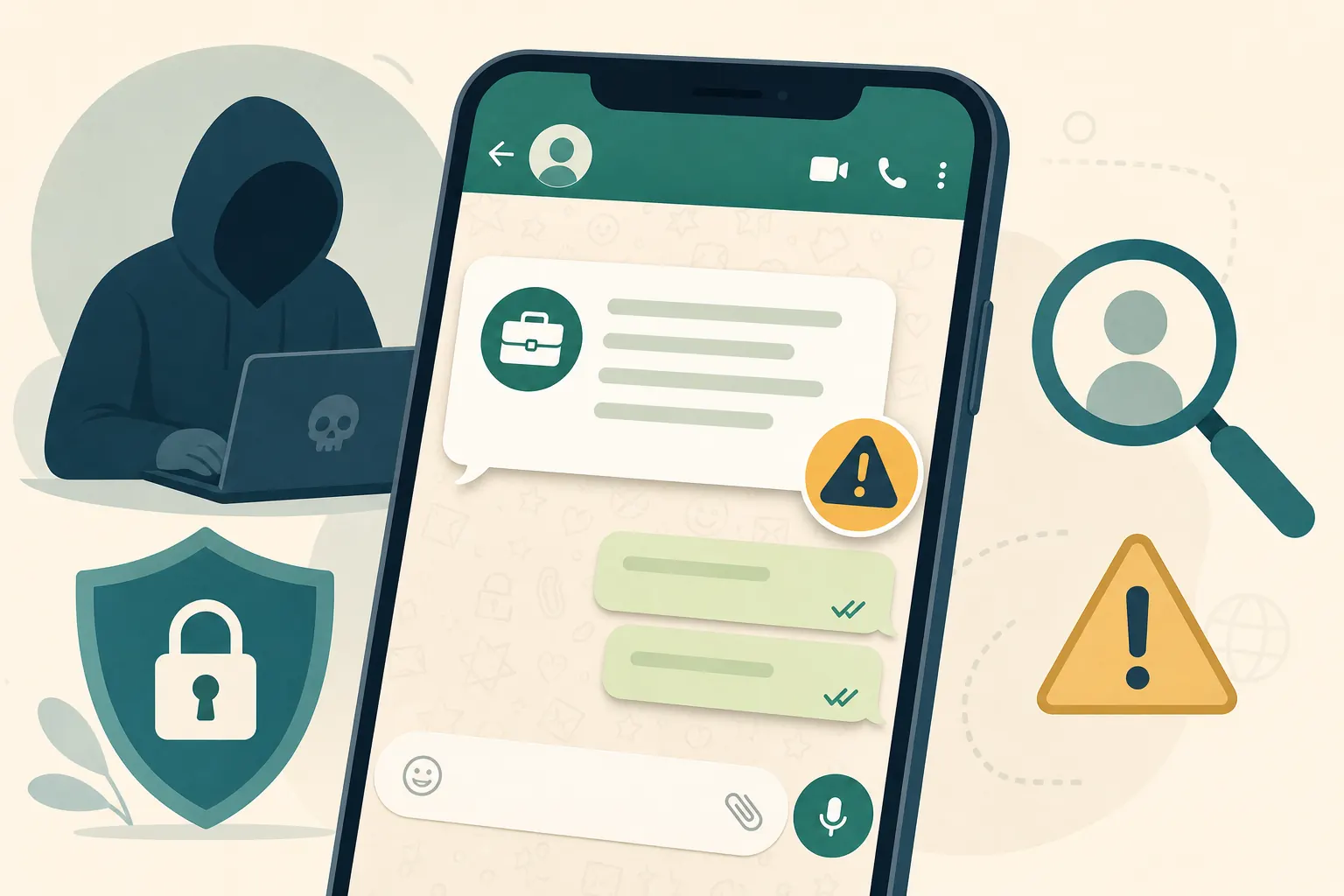
Fake job chats on WhatsApp are common because they feel personal. Someone messages you, praises your profile, and promises flexible work with strong pay. The conversation can sound friendly and professional for days. The trap usually appears when money, OTPs, or ID photos are requested — often after you already feel invested in the “job.”
This guide breaks down how these scams unfold, how to verify an offer off the chat, and what to do if you already sent money or personal data.
How these scams usually unfold
Most fake WhatsApp job offers follow a funnel designed to build trust first and ask for money later.
- Friendly first message about remote work
- Quick “interview” with almost no verification of you
- Small fake tasks that create a sense of progress
- A dashboard screenshot showing money you “earned”
- A fee, tax, or upgrade required before withdrawal
- Pressure if you hesitate
- Optional second hit: “recovery agents,” fake lawyers, or more fees after the first payment
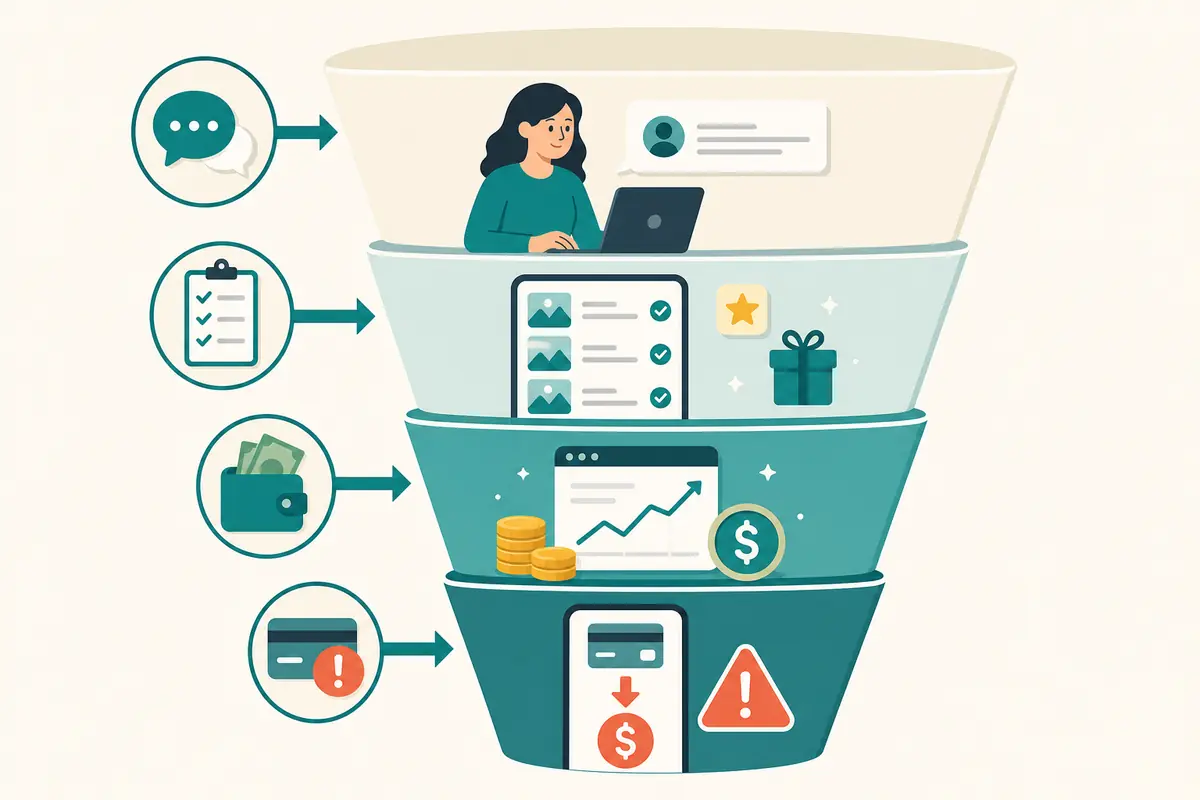
Why the early tasks feel convincing
Scammers understand psychology. Small tasks create commitment. Fake balances create greed and hope. Group chats full of other “workers” celebrating withdrawals create social proof — even when those messages are scripted. By the time a fee appears, many people feel they are protecting money they already “earned,” not gambling on a stranger in a chat.
Some variants skip tasks and jump straight to “registration,” “kit fees,” or “visa processing.” Others pose as well-known brands hiring “mystery shoppers” or “data entry assistants.” The channel stays WhatsApp because it feels informal and hard to verify.
How the scam works behind the scenes
From the attacker’s side, the operation is usually a sales script:
- Acquire numbers from leaked data, social profiles, or scraped resumes
- Message many people with the same pitch
- Move willing victims into a “training” workflow
- Collect fees through wallets, gift cards, or peer-to-peer apps that are hard to reverse
- Harvest OTPs or ID photos for account takeover or identity misuse
- Disappear or rotate numbers when reports rise
You are not negotiating with a hiring manager. You are talking to a conversion funnel.
Red flags that matter most
- Pay is unusually high for simple copy-paste or “like and review” tasks
- No official job page you can verify independently
- They avoid company email and stay only on WhatsApp
- They ask for registration fees, crypto deposits, or gift cards
- They ask for OTPs, banking screenshots, or ID “for onboarding” too early
- Withdrawal is always blocked by a new payment requirement
- The “HR” person cannot join a real video call from a known company account
- They discourage you from telling family members or “slowing down verification”
Soft red flags people overlook
Not every fake job starts with an outrageous salary. Watch for softer tells:
- The recruiter found you, but cannot explain which public post or platform led them there
- Contracts arrive as blurry images or editable files with no legal entity details
- Payment platforms keep changing (“use this wallet today”)
- They claim international companies cannot use normal payroll “because of policy”
- Negative reviews appear when you search the exact company name plus “scam” or “WhatsApp”
One soft flag may be explainable. Several together are a pattern.
How to verify a WhatsApp job offer
Do this before you send ID photos, money, or banking details.
- Search the company name + “careers” on the official website (typed by you)
- Confirm whether the role exists publicly
- Ask for a company email domain and call a published phone number
- Never share OTP codes with recruiters
- Do not install unknown APKs or “task apps” from chat links
- Reverse-search logos and recruiter photos when something feels recycled
- Ask how taxes, contracts, and payroll are handled — vague answers are a warning
Step-by-step verification routine
Use a short checklist every time an unsolicited WhatsApp job appears:
- Pause the chat. Do not send money “to keep the slot.”
- Copy the company name and search it in a browser yourself.
- Open only the official domain you recognize, not ads or lookalike sites from the chat.
- Find careers or contact pages. Call a number published there, not a number the chat provides.
- Ask the published contact whether this WhatsApp recruitment is real.
- If nobody can confirm it, end the conversation. Block and report.
This takes longer than tapping “Yes.” It is still cheaper than a “training upgrade.”
Common mistakes that keep the scam going
- Believing fake dashboards and withdrawal screenshots
- Paying a “small” first fee because it seems reversible
- Sharing OTPs to “activate the worker account”
- Installing task apps from links instead of official stores
- Sending passport or national ID photos early without a verified employer
- Staying in the chat out of embarrassment after the first payment
- Trusting testimonials inside the scammer’s own group chat
Embarrassment is part of the design. Scammers count on silence. Reporting helps the next person, and it often helps your own recovery process with banks or platforms.
What to do if you already sent money
Act quickly and document everything.
- Contact your bank/payment provider immediately
- Save chat screenshots, wallet addresses, and phone numbers
- Report in WhatsApp and to local cybercrime channels where available
- Warn friends if the scam used your name or contacts
- Watch for follow-up “recovery” scammers who claim they can get refunds for a fee
- Change passwords if you reused any credential in their “portal”
- Monitor accounts if you shared OTPs, card photos, or ID documents
If you already shared an OTP or ID
Treat that as potential account or identity risk, not only a job issue.
- Change passwords on related email and banking accounts from a trusted device
- Enable or confirm two-factor authentication
- Review login sessions and connected devices
- Tell your bank if ID images or full card details were shared
- Be alert for new scams that reference your real documents
Do not pay a second stranger who messages you claiming they can recover the first loss. That is often the same criminal network with a new script.
What a safer job search looks like on chat apps
WhatsApp can be a contact channel after you already verified an employer. It should not be the only channel for hiring, contracts, and payments.
Safer patterns:
- You applied on an official careers page first
- The recruiter uses a company email you can verify
- Interviews happen on known platforms with identifiable company accounts
- You never pay for training, equipment deposits, or withdrawal clearance
- Payroll goes through normal employment or contractor processes, not personal wallets
If a role is real, verification will not destroy the opportunity.
Longer FAQ
Are all WhatsApp jobs fake?
No. But unsolicited high-pay task jobs with withdrawal fees are a major scam pattern. Treat cold messages as unverified until the company exists off WhatsApp.
Can I trust screenshots of earnings?
No. Dashboards and balances are easy to fake. Screenshots prove nothing about money you can withdraw.
What if they already paid me a little bit?
A small early payout is sometimes used as bait to set up larger fee requests later. A partial “win” does not certify the operation.
Is crypto payment proof that the company is modern?
No. Crypto and gift cards are popular because transfers are hard to reverse. Payment method is not a trust signal.
They have a website. Does that mean they are real?
Not by itself. Scammers spin up cheap sites and logos quickly. Check registration details, careers pages, independent reviews, and whether you can reach a real organization by phone or official email.
Should I confront the scammer for a refund?
Usually no. Preserve evidence, cut contact, and work through your bank or local reporting channels. Continued chat often leads to more social engineering.
Can scammers use my chats to target my friends?
Yes. If your account or contacts are exposed, warn people and review WhatsApp security settings, linked devices, and two-step verification.
Key takeaways
- Fake WhatsApp jobs build trust with tasks and fake earnings before asking for money.
- Paying to withdraw, upgrade, or clear taxes is a classic scam demand.
- Verify companies on official websites and published phone numbers, not inside the chat.
- Never share OTPs with recruiters.
- If you already paid or shared data, document everything, contact your bank, report, and ignore recovery scams.
Was this guide helpful?
Tap like or dislike — one vote per visitor.
Comments
Share a tip or question. Keep it practical — no spam, links farm, or personal data dumps.
- Loading comments…