Education guide
USPS Package Tracking Text Scam (2026): Is That Unpaid Postage Message Fake?
How USPS package tracking and unpaid postage text scams work, how to tell fake delivery texts from real tracking, and what to do if you clicked.
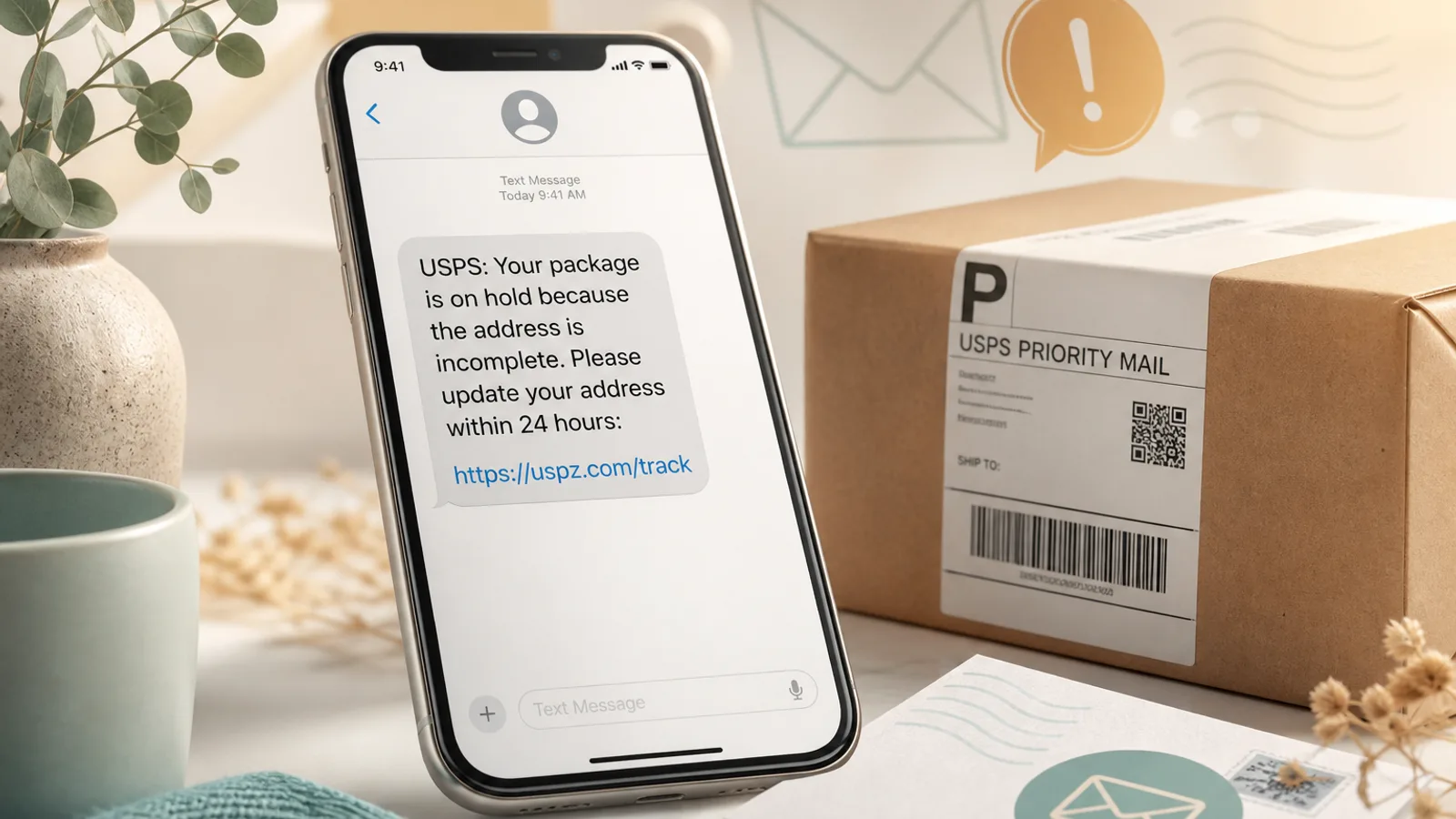
You get a text saying your package cannot be delivered until you update your address, pay unpaid postage, or confirm tracking details. If you are actually waiting for an order, the message lands perfectly. That is why USPS package tracking text scams keep working. They do not need a brilliant lie. They need a believable interruption.
This guide explains how fake package-delivery texts work, how real USPS tracking usually differs, and what to do if you already tapped the link. The goal is simple: help you separate “I am expecting a parcel” from “this message is trying to steal from me.”
What the USPS package text scam is trying to do
Most fake package texts are phishing pages disguised as delivery help. The scammer wants:
- Card details for a small “redelivery” or “postage” fee
- Personal information such as name, address, and phone number
- Data that can be reused in later fraud
- Sometimes device interaction that leads to more spam or malicious downloads
The small charge is part of the trick. People think, “It is only a few dollars. I just want my package.” That emotional shortcut is the opening.
How the scam works step-by-step
- Bait - A text claims there is a delivery problem, tracking issue, or unpaid postage.
- Urgency - It warns your package will be returned, delayed, or canceled.
- Click - You open a link to a fake tracking or delivery page.
- Capture - The site asks for address details, contact info, or a small payment.
- Abuse - Attackers charge the card, keep the data, and may target you again later.
Some scams say they are from USPS. Others mention FedEx, DHL, or a generic “postal service.” The pattern is the important part: problem + link + quick payment.
Common versions of the message
You may see texts like:
- package held due to incorrect address
- unpaid postage required
- failed delivery attempt
- customs or redelivery fee
- “confirm shipping preferences”
- “click to release parcel”
Many people receive these around holidays, sales events, or any time online shopping is busy. But they can happen year-round.
What real USPS tracking usually looks like
The safest mindset is this: real package information can be checked without trusting a random text.
USPS tracking is usually verified through:
- the store or marketplace where you bought the item
- the official USPS website
- tracking that you initiated yourself
- messages you explicitly signed up for
Official package systems do not need you to solve a delivery problem by paying through a surprise link that landed out of nowhere.
A useful plain-English rule
If a package is real, you can usually confirm it from somewhere you already trust.
Red flags in the text itself
Watch for:
- A link in a message you did not expect
- A request to pay a small fee before delivery
- Generic language like “delivery issue” without real context
- Unfamiliar or misspelled domains
- Pressure to act immediately
- Requests to update address details by link
- A message that appears during a period when you are expecting packages and therefore more likely to tap fast
Why timing fools people
Package scams do not work because the message is perfect. They work because people are already in a “where is my order?” state of mind. That makes almost any delivery interruption sound reasonable.
Common mistakes that make package scams succeed
- Thinking a tiny charge must be legitimate
- Believing a tracking page because it looks polished on mobile
- Assuming “I am waiting for a package, so this must be mine”
- Entering address data first and card data second without stopping
- Using the text link instead of the store account or official USPS site
- Checking the fake page while distracted, tired, or in a hurry
The scammer is counting on convenience winning against caution.
A safer way to check package problems
If you receive a suspicious delivery text:
- Do not tap the link.
- Open the retailer or marketplace account where you placed the order.
- Check the order and tracking there first.
- If needed, visit the official USPS site yourself by typing it or using a saved bookmark.
- Compare what is real before doing anything else.
Human tips that actually help
- Keep order confirmations in one email folder so it is easier to verify shipments.
- Use the store app or website where you bought the item instead of clicking delivery texts.
- If relatives shop online often, tell them that fake package texts are now normal background noise, not rare events.
- Treat “small fee to release package” as a classic scam shape.
Step-by-step: what to do with a suspicious USPS text
- Do not click the link.
- Do not enter address or card details.
- Verify through your order account or the official USPS site you open yourself.
- Report the text as junk on your phone or forward it to 7726 where supported.
- For USPS-related spam, forwarding or reporting through official USPS anti-spam channels may also be useful.
- Delete the message after reporting.
What to do if you already clicked
If you only opened the page:
- Close it
- Do not keep browsing it
- Avoid downloading anything
If you entered personal details:
- Watch for follow-up scams using your address, phone number, or delivery expectations
- Be extra cautious with later “customer support” messages
If you entered card details or paid:
- Contact your bank or card issuer immediately
- Ask them about fraud monitoring or replacing the card
- Watch your statements closely
- Change any passwords if you reused them on a fake page
- Report the scam through consumer fraud channels such as the FTC, and IC3 when appropriate
How this differs from a real missed delivery
A real shipping issue may still happen. Addresses get entered wrong. Parcels get delayed. But real logistics problems can be confirmed from:
- the merchant you bought from
- your known tracking page
- the official USPS website
That is the difference that matters. A real package can survive independent verification. A scam depends on bypassing it.
If you want to learn how phishing messages use the same pressure tactics in other channels, see How to Spot Phishing Emails. For website checks after a suspicious link, read How to Tell If a Website Is Safe.
Longer FAQ
Does USPS send text messages?
USPS can provide tracking updates in some situations, but the safest rule is to trust only tracking you requested and confirm through official channels you open yourself.
What about a text saying I need to pay unpaid postage?
That is a common scam angle. Do not pay through the message link.
I am waiting for a package right now. Could the text still be fake?
Yes. That is exactly what makes the scam so effective.
The page looked professional. Does that mean it was legitimate?
No. Scam pages can look clean and realistic. Appearance is not proof.
Should I reply STOP?
For scam texts, reporting and deleting is usually better than engaging.
Could scammers use my address for future fraud?
They can certainly reuse your details in later social-engineering attempts. Treat any follow-up delivery or payment contact with extra caution.
Is this only a USPS problem?
No. Similar scams impersonate many delivery companies and postal systems. The pattern matters more than the logo.
Key takeaways
- Package-delivery texts are one of the easiest smishing lures to believe.
- “Unpaid postage” and “delivery failed” are common scam hooks.
- Do not fix delivery problems from the text itself.
- Check the retailer or official USPS site you open yourself.
- Small charges are bait, not proof of legitimacy.
- If you already paid, contact your bank quickly and monitor for fraud.
Was this guide helpful?
Tap like or dislike — one vote per visitor.
Comments
Share a tip or question. Keep it practical — no spam, links farm, or personal data dumps.
- Loading comments…