Education guide
Jury Duty Scam Call (2026): The Truth About Missed Jury Duty Arrest Threats
How missed jury duty scam calls, fake arrest threats, and follow-up texts work, plus the safest way to verify and what to do if you paid.
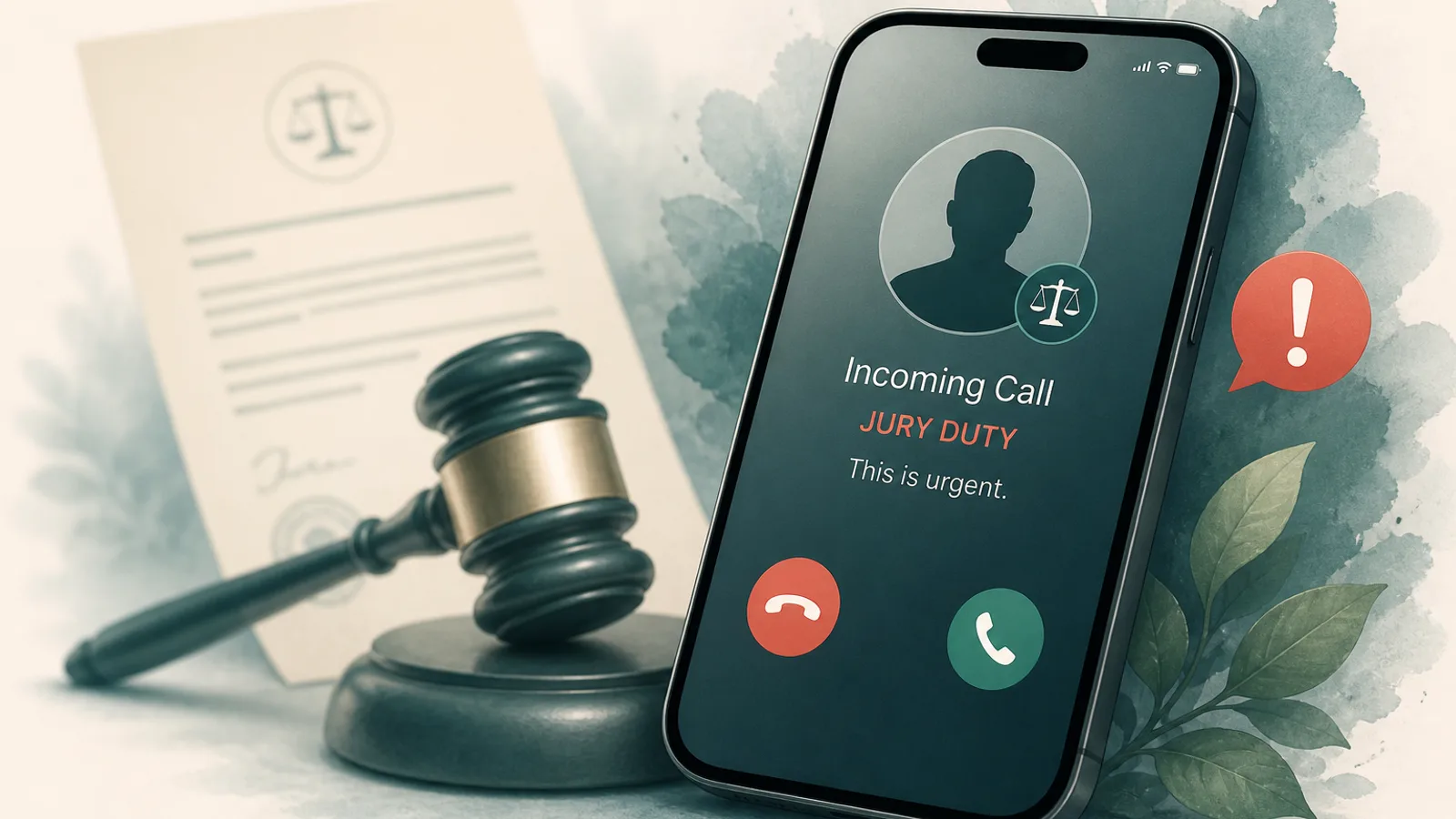
A caller says you missed jury duty and there is now a warrant for your arrest. Then a text or email follows with what looks like official paperwork and a demand to pay quickly. It sounds terrifying because it is designed to. Jury duty scam calls do not work by being subtle. They work by making decent people panic long enough to stop thinking clearly.
This guide explains how the missed-jury-duty scam works, how fake warrants and follow-up texts fit into the script, and what to do if you already sent money or personal information. The goal is not to make you suspicious of every official call forever. It is to help you recognize a very specific pressure tactic.
What the jury duty scam is trying to do
This scam is usually about one of two things:
- getting you to send money fast
- getting enough personal data to use in later fraud
Attackers may demand:
- wire transfers
- gift cards
- cryptocurrency
- payment apps
- card details through a fake site
Some versions ask for Social Security numbers, dates of birth, or other sensitive details under the excuse of “verifying your file.”
How the scam works step-by-step
- Initial contact - A caller claims to be a marshal, sheriff, police officer, or court official.
- Shock - You are told that you missed jury duty, ignored a summons, or now face a warrant.
- Authority theater - The caller gives badge numbers, case numbers, department names, or legal terms.
- Escalation - You are warned not to hang up and told the matter is urgent.
- Proof layer - A fake warrant, document, or website is sent by text or email.
- Payment demand - You are told to pay immediately to avoid arrest or penalties.
The script is carefully built to stop you from pausing. The scammer wants you afraid, isolated, and obedient before a second opinion enters the picture.
Why this scam feels so powerful
Jury duty sounds serious because it is a real civic process. Courts, appearances, fines, and warrants all belong to the world of real consequences. The scam exploits that truth. It wraps a lie in enough official language that your body reacts before your logic catches up.
This is why calm people still get shaken by it. Fear is part of the scam. Feeling fear does not mean the threat is real.
Common red flags in the call or text
- threats of arrest if you hang up
- demand for immediate payment
- insistence on secrecy or urgency
- pressure to stay on the line
- gift cards, crypto, wire transfer, or payment-app instructions
- a fake document sent by text or email
- caller ID that appears official
- refusal to let you verify independently
Important truth about caller ID
Caller ID can be spoofed. A call that appears to come from police, a court, or a government office is still not proof.
What real court or jury-duty processes do not do
Real courts do not:
- call to collect immediate fines over the phone
- text or email arrest warrants to demand payment
- require gift cards, crypto, or wire transfers
- threaten you for wanting to verify the claim
- insist that you stay on the line while paying
That last point matters. A real process does not collapse because you hung up and checked the official number yourself.
How fake documents make the scam more convincing
Older versions of this scam relied mostly on a threatening phone call. Newer versions often add:
- PDF-style notices
- fake warrant images
- seals and signatures
- links to official-looking websites
- balances due with countdown pressure
The goal is not legal accuracy. It is emotional control. A document only needs to look official for thirty seconds to do damage.
Common mistakes that make jury duty scams succeed
- staying on the call instead of hanging up
- believing the case number proves legitimacy
- trusting caller ID
- paying because “if this is real, I cannot risk it”
- following instructions to keep the matter secret
- visiting a website sent by the caller
- giving personal information before independent verification
Scammers do not need your full trust. They need your fear to outrun your checking process.
Step-by-step: what to do during the call
- Do not pay.
- Do not give personal information.
- Do not stay on the line under pressure.
- Hang up.
- Look up the official court or local authority number yourself.
- Call that real number and ask if anything is actually wrong.
- Report the scam call or message through the tools available in your region and phone platform.
A good human line to remember
“If this is real, I can verify it safely.”
That sentence cuts through a lot of panic.
If they send a follow-up text, email, or website
Treat it as part of the same scam. Do not click links from the message. Do not use phone numbers or contact details provided inside the document. Find the real court or official office yourself.
This matters because the second stage often feels more convincing than the first. Many people think, The caller had paperwork, so maybe it is true. But scammers know that too. The fake proof is part of the product.
What to do if you already paid
Move quickly:
- Contact your bank, card issuer, or payment platform immediately
- Explain that you believe you were targeted by an impersonation scam
- Save screenshots, call logs, payment receipts, and messages
- Report the fraud through consumer fraud channels such as the FTC, and IC3 when relevant
- If needed, file a police report for documentation
- Tell family or coworkers so the same script does not hit them next
If you gave up personal information, think beyond the payment. Watch for later fraud attempts pretending to “help,” “investigate,” or “recover” your money.
Emotional recovery matters too
People often feel embarrassed after this scam, especially because the threat sounded so dramatic. That shame helps attackers because it keeps victims quiet. If this happened to you, focus on stopping the damage first. Being frightened by an official-sounding threat is human, not foolish.
Related scams that use the same fear pattern
Jury duty scams overlap with:
- DMV text scams
- municipal court payment texts
- fake police or marshal calls
- bank impersonation scams that claim your money is “at risk”
The details change, but the shape is familiar: authority + urgency + isolation + payment.
If you want to see how fake government texts work in a different form, read DMV Text Scam (2026). If you want broader website-check habits, read How to Tell If a Website Is Safe.
Longer FAQ
Can a court really call me about jury duty?
Courts can communicate in formal ways, but a threatening demand for immediate payment by phone, text, or email is a major red flag.
What if the caller knew my name and address?
That does not prove legitimacy. Basic personal information is often available from leaks, data brokers, or prior exposure.
What if they gave me a badge number or case number?
Scammers use official-sounding details because they know people associate details with truth.
Can I trust an official-looking warrant sent by text or email?
No. That kind of message is commonly faked in these scams.
Why do they want gift cards or crypto?
Because those methods are hard to reverse and help scammers move money quickly.
Should I call back the number that contacted me?
No. Use a real number you find independently from the official court or agency website.
What if I am not sure whether I ever received a jury summons?
That is still not a reason to trust the caller. Check through the real court directly.
Key takeaways
- Missed-jury-duty scam calls are designed to create panic, not clarity.
- Fake documents and fake websites often appear after the first call.
- Real courts do not demand immediate payment by phone, text, or email.
- Hang up and verify through a number you find yourself.
- Caller ID, badge numbers, and case numbers are not proof.
- If money or personal data already moved, act quickly and report the scam.
Was this guide helpful?
Tap like or dislike — one vote per visitor.
Comments
Share a tip or question. Keep it practical — no spam, links farm, or personal data dumps.
- Loading comments…